



LIFELONG FRIENDS TURN A SHARED VISION INTO A THRIVING ARCHITECTURE FIRM
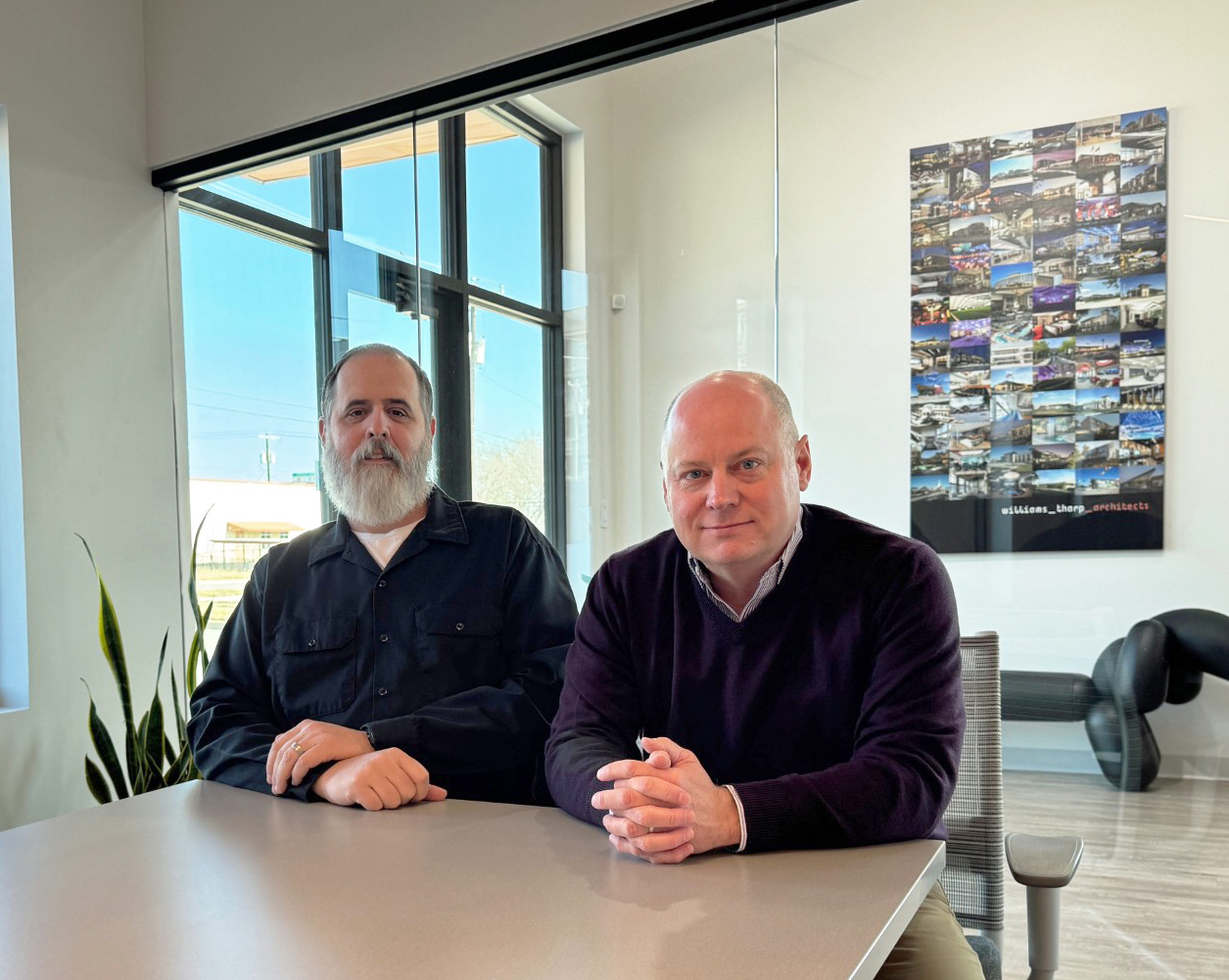
Most five and six year olds dream of becoming superheroes or professional athletes. But not Jim Tharp and Richard Williams. They were imagining something different – a future of bringing spaces to life. “In first grade, my dad was cleaning out the attic and had a box of drafting tools from an engineering class. When I asked what they were, he showed me how to use them. And I took them and started drawing the house across the street. That was it,” said Williams Tharp Architects co-founder Richard Williams.
Co-founder Jim Tharp remembers that spark just as vividly. “For me, when I was around 5, I got a set of Legos and started building with them. Then, I would go with my grandfather, who was a home builder, to job sites, where I’d sit and look at those blueprints. I liked to draw, so for me, that was when I knew.”
But it was 7th grade at Richland Middle School where their dreams would converge. During their shared band and art classes, the two became fast friends – the unlikely beginnings of a partnership that would span more than four decades. Weekends would find them at the Fort Worth Public Library, paging through architecture books and teaching themselves the basics of design. A 10th grade vocational drafting class and a teacher that allowed them to focus their attention on architectural drafting shaped the idea that would eventually become Williams Tharp Architects.
Jim notes how their early years prepared them for the journey. “We were lucky that at our previous firm, we had the privilege and latitude to learn all of the skills we needed to run the business – business development, project management, design, how to take care of the client and manage the project budget, and construction management.”
Their lifelong friendship become a strategic advantage. “When you’ve been best friends for more than 40 years, there’s a level of trust that is unmatched. We know that we can count on each other. We think a lot alike so we can solve problems quickly, more efficiently. We tend to arrive at decisions quickly,” said Richard.
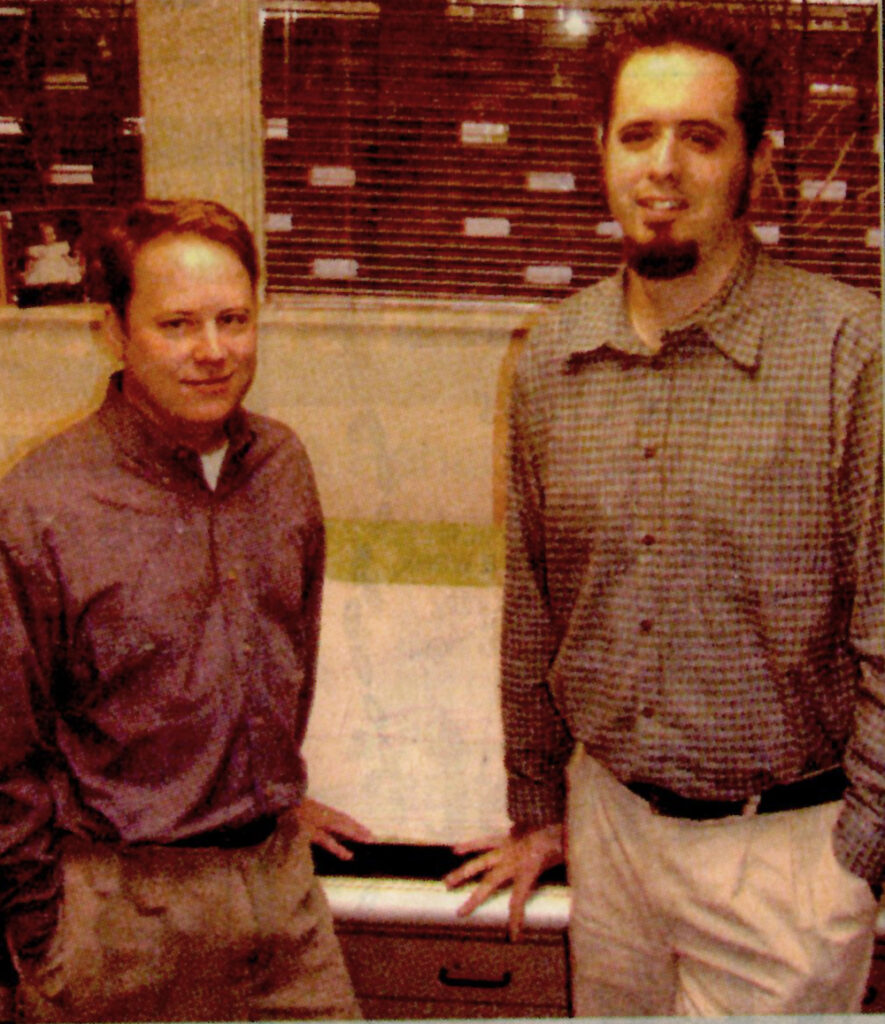
But the two are, in fact, polar opposites in more ways than just their appearance. Jim is a tall guy with a big personality to match. A self-described ‘people person’, he excels at
collaborating with others from all walks of life – from executives to tradespeople on job sites. “Being in the field is my favorite. I think it goes back to being on job sites with my grandfather as a kid, talking to all of the craftsmen and understanding the way things are put together,” he mused.
Richard, on the other hand, tends to be more reserved and contemplative. “I’m the worrier, but that has become a strength in our partnership. I’m the risk manager, always thinking, ‘What is the long-term outcome of this decision?’ It’s always top of mind. I think about all of the scenarios that can play out so we can be as prepared as possible.”
Jim enjoys the building process and looking at the details of a design, understanding how the building will function and how the systems will fit together in the most efficient way. Richard excels in the creative aspects of design, how the building will look and the feelings it will evoke. Their differences are precisely why the firm thrives. Together, they create spaces that are both efficient and inspiring.
That balance of creativity, innovation and practicality and a focus on exceptional service is why clients return to WTA again and again – with multiple municipal projects in Euless, Bedford, and Flower Mound. One of their most significant recent accomplishments: the Mustang Park Recreation Center in Irving — poised to become the largest municipal recreation center in Texas at more than 127,000 square feet.
But for Jim and Richard, the goal was never about achieving the largest facility – it was about giving the City of Irving an innovative, efficient facility that met all of the City’s needs, both now and far into the future. “We didn’t set out to design the biggest. But, as we were working with Irving’s project team, we realized we needed that much space to accommodate what the community asked for. Yes, it’s a large project, but there is no wasted space. That is a testament of being able to look at how things go together, visualize all of the possibilities and outcomes and design a space efficiently and affordably. I think it’s also a testament to how well Jim and I work together. We had a client that challenged us, pushed us – which gave us the momentum we needed,” said Richard.
The project exemplifies the goal of WTA – collaborative relationships that lead to successful projects.
“Working with these guys has been great!” shared Joe Moses, Director of Parks and Recreation for the City of Irving. “For me, they took a fresh approach and pushed the envelope on design and concept. They really had value in mind but also didn’t cut corners on products. They made sure we got good value, but also nothing that wouldn’t stand the test of time.”
Joe calls Mustang Park his “drop the mic” project. “This was a challenging project, and these guys were up for it and flexible. This is a great project to finish out my career. Working with them captures everything that my career has been about—exceeding expectations, pushing the envelope, innovating. We came up with some crazy things, and they made it work. I can’t imagine we would’ve gotten this product working with a different firm. I didn’t want cookie cutter. I wanted something unique where we could put our mark on it. And these were our guys! I can’t wait to see it going up. It’s like waiting for Christmas!”
For Jim and Richard, the goal is always to move past cookie cutter design. “Spaces have the power to influence mood and emotions and to improve the quality of life for end users. So for us, design starts with the individual person – building a space that makes their life better, easier. But it expands to how that building impacts the occupants socially, economically, and environmentally.”
While those impacts have influenced their designs since the beginning of their careers, how they’ve done the work has changed drastically. Technology has infiltrated every aspect of our society, but the architecture/construction industry has long been one of the most innovative.
Since Jim and Richard started their careers, they’ve seen a shift from building plans and renderings drawn by hand to 3-D renderings and plans done in a fraction of the time with the help of software. “We witnessed the birth of the PC. We taught ourselves AutoCAD 2.0. Now we don’t even use AutoCAD anymore, we use Revit – which models in 3D to allow us to see all components of a building. We use virtual reality to show the building in real time, as if we were physically taking a walk through. We used to print drawings, overnight them to a job site and then wait to get them back with all of the revisions. Now, with the click of a button, we can send drawings instantly. As project managers, that means clients have higher expectations and expect instant responses,” said Jim.
This innovation affects every aspect of construction as well. The entire team – architects, engineers, and trades – can now work seamlessly and simultaneously. Where everyone on a job site used to work from one set of drawings housed in a job trailer, now most workers on a job site view digital drawings on their tablets. This translates into projects that are built faster and better, since trades can see potential issues faster and deal with them proactively.
And, like most industries, AI is making a profound impact. Some see the potential for architects and engineers to become ‘validators’ of what AI generates. And it has the potential to decrease the need for certain aspects of the A/E industry – such as artist and interior designers. For example, wall graphics, murals, even décor ideas can be generated with AI and allow for multiple modifications quickly until it generates the design exactly to the client’s specifications – without having to depend on a person and the time it takes to create those same things. From a client perspective, it can be a way to make projects more cost effective.
However, WTA continues adapting without losing the human-centered approach that defines them. “AI will not be able to collaborate as effectively as a human, especially in terms of client management. And when it comes to construction management on a job site, I don’t see a way for AI to be as effective. I think for us, we want to be careful about not cutting out humans. We encourage our staff – many of whom are starting their careers – don’t rely on technology to do their thinking for them. One of the ways we’ve set ourselves apart is finding innovative ways to problem solve on projects. So, yes, the world is changing but hard work will still be the key to success.”
When reflecting on the past and thinking about what they’d go back and tell their younger selves, their answer is identical, “Don’t play it safe. Take more risks.” And for Jim and Richard, WTA has been a risk well worth taking. Jim – Frank Welch – architect in Dallas – “Be subtle. Be evocative. Be graceful. But above all, be credible.” That influenced me in all aspects of life. Richard – structural professor – “Surround yourself with excellence”