

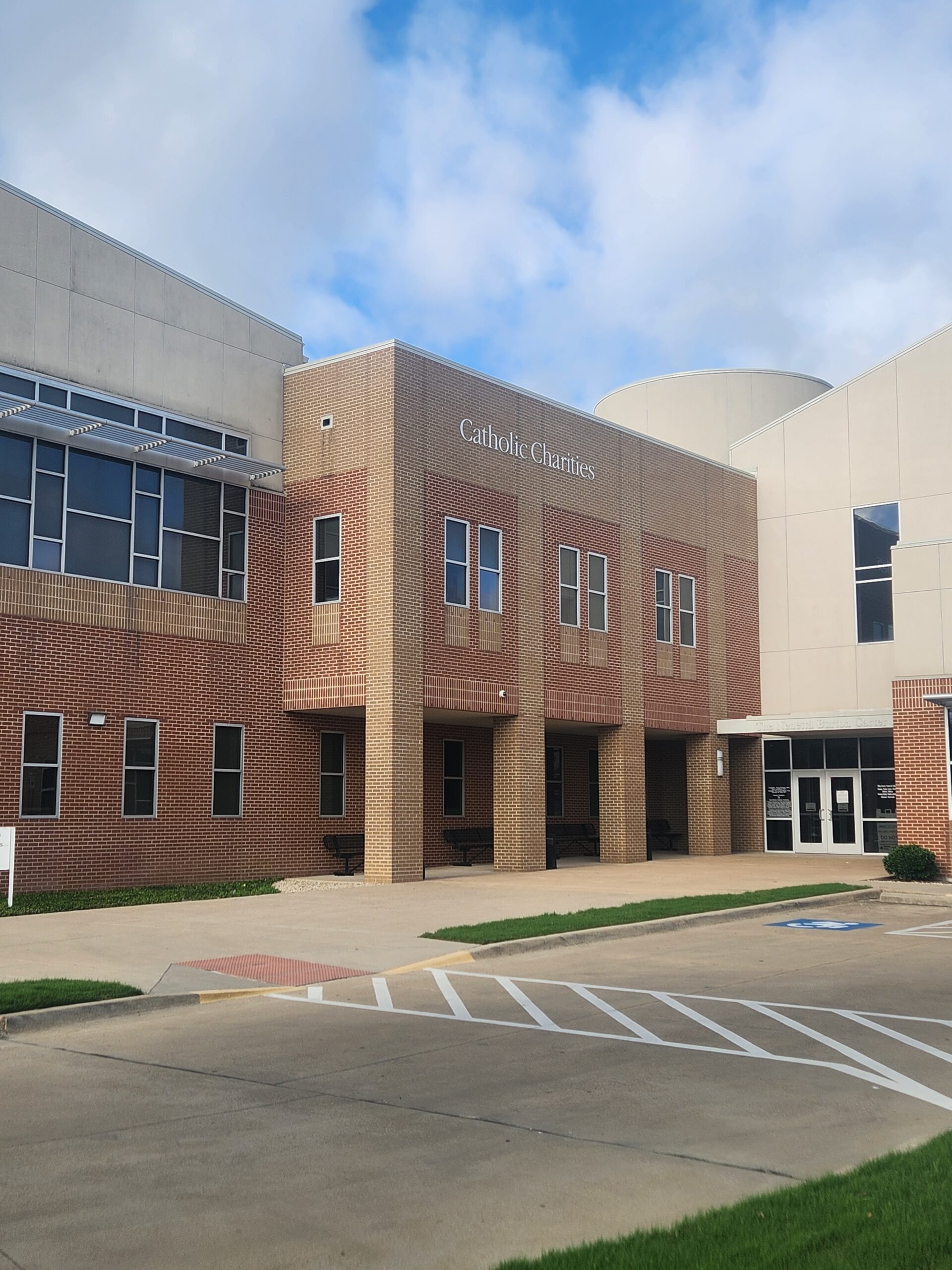

Catholic Charities of Fort Worth introduced a new initiative that focuses on education not merely as a social service, but as a form of workforce infrastructure.
It might just be the best-kept secret in the world of local education and career advancement.
The Stay the Course program is an education‑completion model that addresses a problem many area and national employers have faced in recent years, which is talented employees leaving school just short of completion due to financial instability, childcare gaps, or short‑term crises, never to rejoin the talent pipeline.
Stay the Course assists working students to help them finish degrees or credentials, thereby increasing retention, lifetime earnings, and long‑term workforce participation.
Heather Reynolds, President and CEO of Catholic Charities Fort Worth, heads up the program and said failure to complete educational programs is a significant issue. “There’s a lot of ways we can look at this,” Reyolds said. “Roughly 1 in 4 adults in Tarrant County have some college, but no credential. Fewer than 4 in 10 community college students complete their education, and then there are about 253,000 people in our county living below the poverty line.

“That doesn’t take into account the number of people who are not below the poverty line but still don’t earn enough to make ends meet. That’s a big problem in our community. What so many people don’t understand is that when you are low-income, it is really hard when you are working 40 or 50 hours per week to support your family and then go and get credentialed up.”
That’s where Stay the Course steps in. “Our focus, and yes, the goal is persistence and completion, but the goal is also to get them into employment on the back end,” Reynolds said. “The way that has to be done is not only to focus on the credential, but ask any employer, and so many will tell you that in addition to needing a credential, we need the soft skills developed in the workforce that make them a good employee.
“We need someone to be balancing their lives so they can show up to work, that they can get to work, and that their children are taken care of while they’re at work. An employer can’t focus on all of those things, and that’s where we come in at Catholic Charities, because we can remove all of those obstacles. We help clients figure out how to remove those obstacles so we can successfully launch people into the work force in a really good way.”
According to a news release, Catholic Charities Fort Worth (CCFW) delivers direct services, innovative poverty solutions, and income-generating social enterprises rooted in a relentless commitment to ending poverty—meeting families in the crisis they face today while building real, long-term pathways out of poverty.
Reynolds said the program started when some “wonderful guys in oil and gas” offered to give the organization the funds to help people earn a living wage with a virtual carte blanche on how those funds would be utilized.
“We started a small little program that was helping students with private philanthropy learn how to become aviation mechanics or accounting clerks, two fields where we could support their education,” Reynolds said. “Then we met these wonderful economists at Notre Dame who said we were onto something here. They said that one of the biggest problems we’re facing as a nation, which was back in the early 2010s, was not student access to post-secondary education, but them actually completing it. “They said there is a lot of money for funding the education itself, so why don’t you go all in on your wrap-around to case management services? We said, ‘Okay, let’s do it.'”
The results were undeniable. Monitored by a group from the University of Notre Dame, CCFW soon realized just how effective the program was.
“What we saw was that those who had a Catholic charities navigator were four times more likely to persist and complete their education than those who didn’t,” Reynolds said. “There are very few results that can show that across the country. We’re so fortunate at Catholic Charities in that we serve a 28-county diocese, so we started expanding our Stay the Course services into other parts of the Fort Worth Diocese based off of what the research has told us and what we have learned.”
Catholic Charities provides Stay the Course services at Hill College, North Central Texas College, Ranger, Vernon and Weatherford College, Midwestern State University, Texas Women’s University and the University of North Texas.
Reynolds said one of the most effective ways Stay the Course assists people is that it helps members to change the way they think about adversity. “One example is that a client has grown up in generational poverty,” Reynolds said. “A client gets a bad grade on their first test, a client has a tape running through their heads saying they will never be good enough, they will never be able to succeed. Why are they even pursuing an education? Their Catholic charities case manager comes in and helps them develop the emotional resilience to say, ‘Okay, let’s examine that D you got on your test. Let’s not let that be the end. Failure is part of life. Let’s figure out what we need to do to build a place around you so the next time you take the test, you make a good grade on it, and how do we propel you to that success?”
Positive feedback is a rewarding aspect of overseeing the program for Reynolds, and there is one sentiment in particular that she hears over and over again. “I was just with a bunch of our clients last Thursday,” Reynolds said in early May. “And the comment I heard again and again was ‘I had someone who believed in me, until I believed in myself.’ I think that sums up what this is. Every single one of us in this world, rich, poor, middle-class–we need people to believe in us; to be in our corner and be our support system.
“And when you lack that kind of social capital, it’s nearly impossible to progress. When you hear your client say, ‘I had someone to believe in me, until I believed in myself,’ it’s a pretty remarkable thing. And I will tell you I heard that again, and again.”