


FOR IMMEDIATE RELEASE — A market study of Fort Worth’s historic Camp Bowie Boulevard corridor, completed June 2025, has revealed both the district’s strong visitor activity — nearly 2 million annual visits — and key opportunities to improve parking, walkability, and the overall experience for residents and visitors.
The study, conducted by Main Street America, using their framework, provides a data-driven roadmap to strengthen the historic commercial corridor known as “The Bricks.” The effort was led by Camp Bowie District, Inc. (CBDI), the Public Improvement District (PID) manager, and a nonprofit focused on preserving and enhancing the six-mile stretch of Camp Bowie Boulevard, which includes more than 700 mostly locally owned businesses and serves the 11 surrounding neighborhoods.
Camp Bowie District’s Board of Directors received the data and suggested strategies in June and planned its fiscal-year activities and implementation. Activities included area branding, safety enhancements, and node identification. “The Main Street study and Transformation Strategy positions Camp Bowie to preserve the best parts of it while looking to the next chapter of the historic boulevard,” said Lydia Guajardo Rickard, Camp Bowie District Inc, executive director. “The useful data builds a compelling narrative for our future, giving us intentional groundwork for tomorrow’s business community. As an organization, we are committed to sustaining a healthy business environment for legacy businesses to exist.”
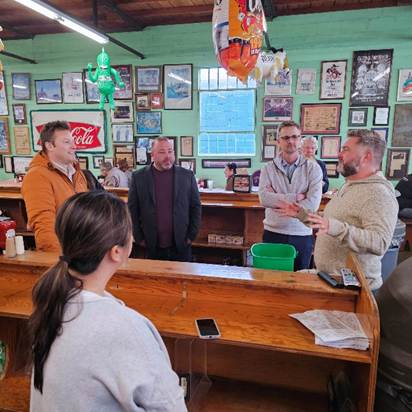
About the Data Mobile location data analyzed as part of the study shows the district attracts approximately 635,300 unique visitors each year, generating 1.9 million visits — a 5% increase year over year. The average visitor spends about 77 minutes in the district. Dining is the primary draw, with 74% of visitors citing restaurants as their main reason for visiting, followed by shopping for fun (38%) and everyday needs (35%).

Survey responses and market analysis identified several infrastructure challenges that affect how people experience The District. Parking availability, traffic patterns, road conditions, and pedestrian accessibility were frequently cited concerns, with respondents noting that improvements in walkability and connectivity could enhance The District’s appeal and support local businesses. Demographic analysis also revealed that the district attracts visitors with profiles similar to those of nearby residents, including young professionals and middle- to upper-income Baby Boomers. Within a five-minute drive of the corridor, the population is about 22,000, with a median household income of $82,458.
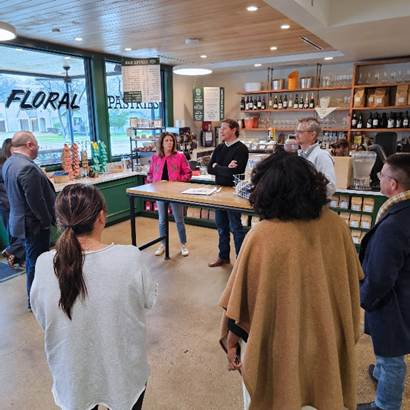
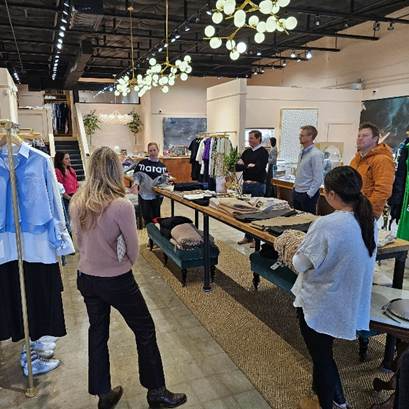
CBDI is currently using the study’s findings to guide its Transformation Strategies — focused on three- to five-year initiatives designed to strengthen The District’s economy while preserving its historic character. Strategies support business growth, attract new retail and dining concepts, improve pedestrian access, and address parking challenges within the district. “We are able to take the best parts of Camp Bowie and preserve them while looking to bring a renaissance of sorts to the areas that need it,” said C.B. Team, Chairman, Economic Development & Design Review Committee. “We are committed to our future while protecting the integrity of the corridor. For 100 years, Camp Bowie has been a connector moving east and west and providing a haven for local businesses to thrive. That has not changed; we just need to be positioned to meet the needs of today’s consumers in a rapidly growing urban center.”
To read the complete study and see the implemented strategies and tasks, click here.
Since its founding in 2001, CBDI has worked to preserve the historic character of Camp Bowie Boulevard while supporting economic development and infrastructure improvements throughout The District. The study was conducted through Main Street America, a nonprofit subsidiary of the National Trust for Historic Preservation that supports preservation-based economic development in historic commercial districts nationwide. Communities participating in the Main Street America network have generated more than $101.5 billion in public and private investment, created nearly 170,000 new businesses, and rehabilitated more than 325,000 historic buildings since 1980.


About Camp Bowie District, Inc. Camp Bowie District, Inc. is a nonprofit organization dedicated to improving and maintaining Fort Worth’s historic Camp Bowie Boulevard corridor through community engagement, historic preservation, and economic development.
About Main Street America Main Street America leads a national movement committed to strengthening communities through preservation-based economic development in historic downtowns and neighborhood commercial districts. For more information, visit mainstreet.org.
