



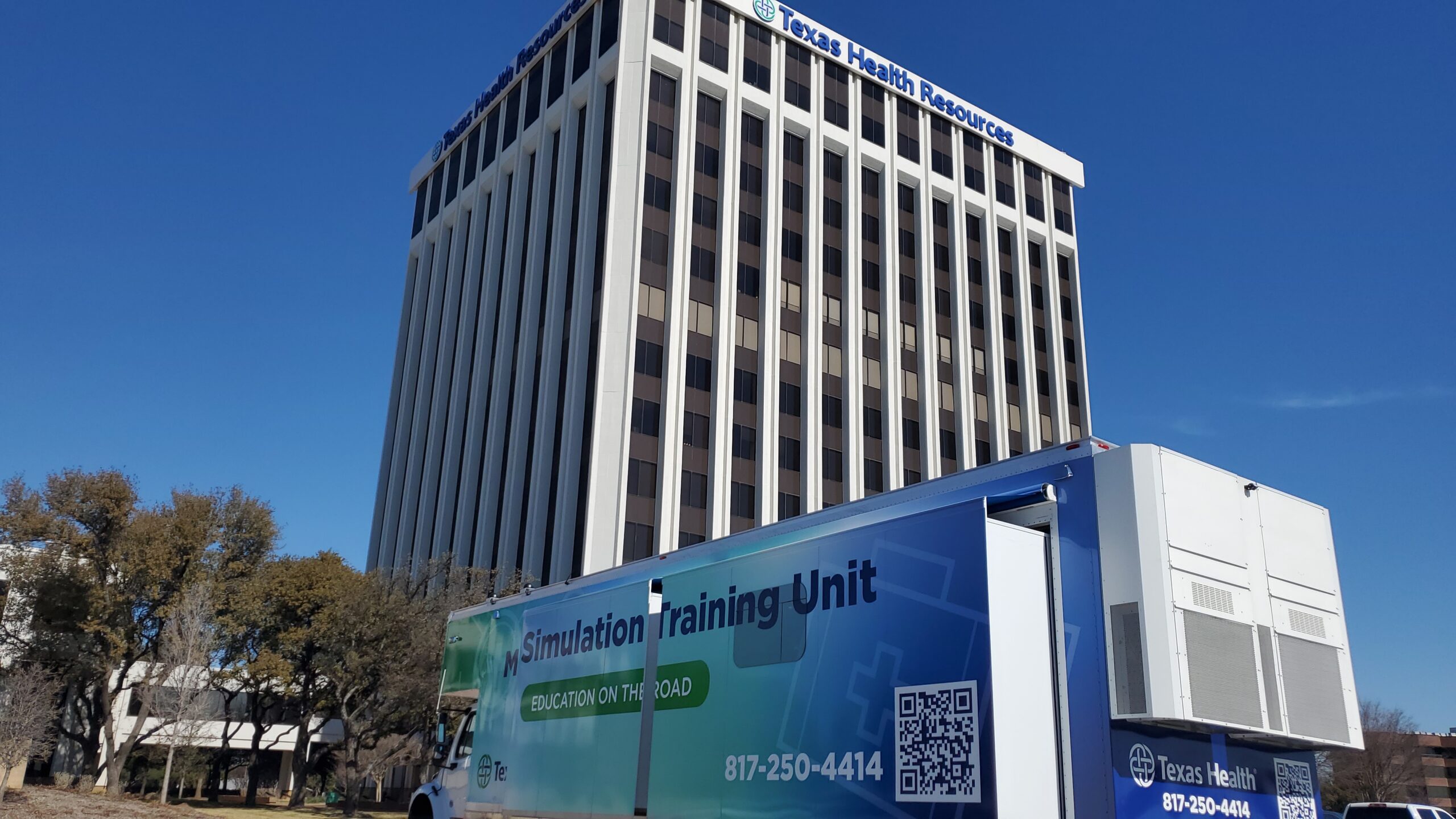
Hospital’s mobile simulation lab is largest in North Texas
Texas Health Harris Methodist Hospital Fort Worth is providing advanced technology and simulations to train individuals where it’s needed most — in Greater Fort Worth and outlying rural communities. Texas Health Fort Worth’s unique mobile simulation lab, or sim lab, happens to be the largest in North Texas, too.
“Our mobile simulation training lab conveniently brings the classroom to the parking lot,” said Rhonda Thompson, M.S.N.-Ed, R.N., CA-SANE, Texas Health Fort Worth’s Medical Simulation Program manager. “By meeting individuals where they are, healthcare professionals and students can eliminate long-distance travel, gain essential skills and immediately return to their normal schedules.”
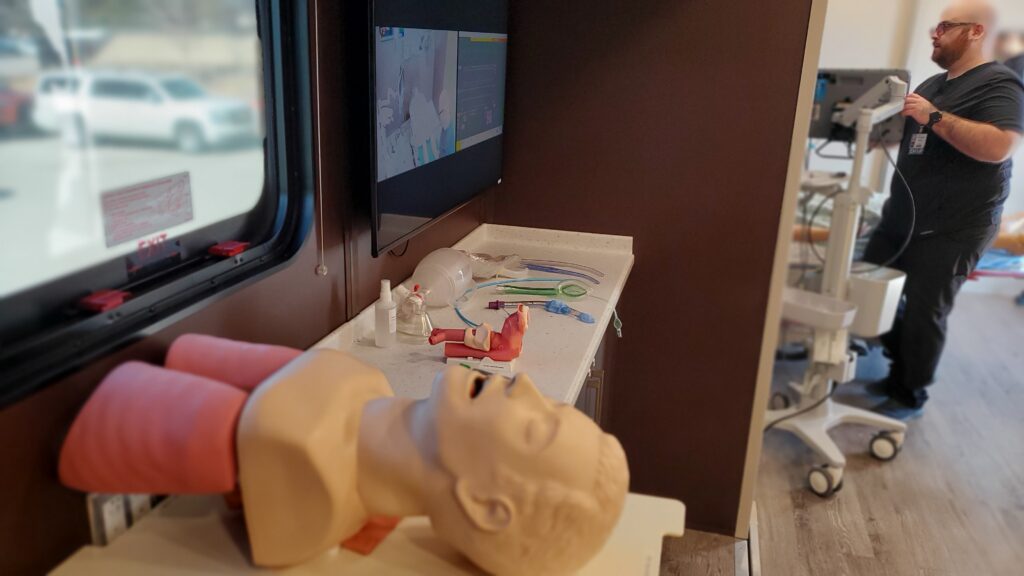
The mobile unit is an expanded service of Texas Health Fort Worth’s Amon G. Carter Medical Simulation Training Center, located above the hospital’s Emergency Department. Training scenarios on procedures such as intubation, intravenous catheter insertion and ultrasound exams are all customized to meet specific organizational needs, and each adheres to best practices established by the International Nursing Association for Clinical Simulation and Learning [inacsl.org] (INACSL).



Meeting the needs of the community The mobile unit is created on a smaller scale than the brick-and-mortar simulation lab but still provides the same realism and hands-on experience for learners and medical professionals, added Thompson. Complete with a control room and mini breakroom, the mobile unit is also separated into a patient room and a multipurpose room and is outfitted with a retractable ramp that is compliant with the Americans with Disabilities Act [ada.gov].
As Texas continues to grow, so does the need for healthcare workers, including emergency medical technicians [twc.texas.gov] (EMTs) and nurses. Although the number of new nurses is growing, the increase is not enough to meet expected needs. By 2032 [onlinenursing.baylor.edu], the demand for registered nurses (RNs) in Texas is expected to grow by 38.8%, leaving a deficit of more than 57,000 RNs statewide.
Compounding the situation is that rural residents drive on average 60 miles [pfd.hhs.texas.gov] just to reach a hospital.